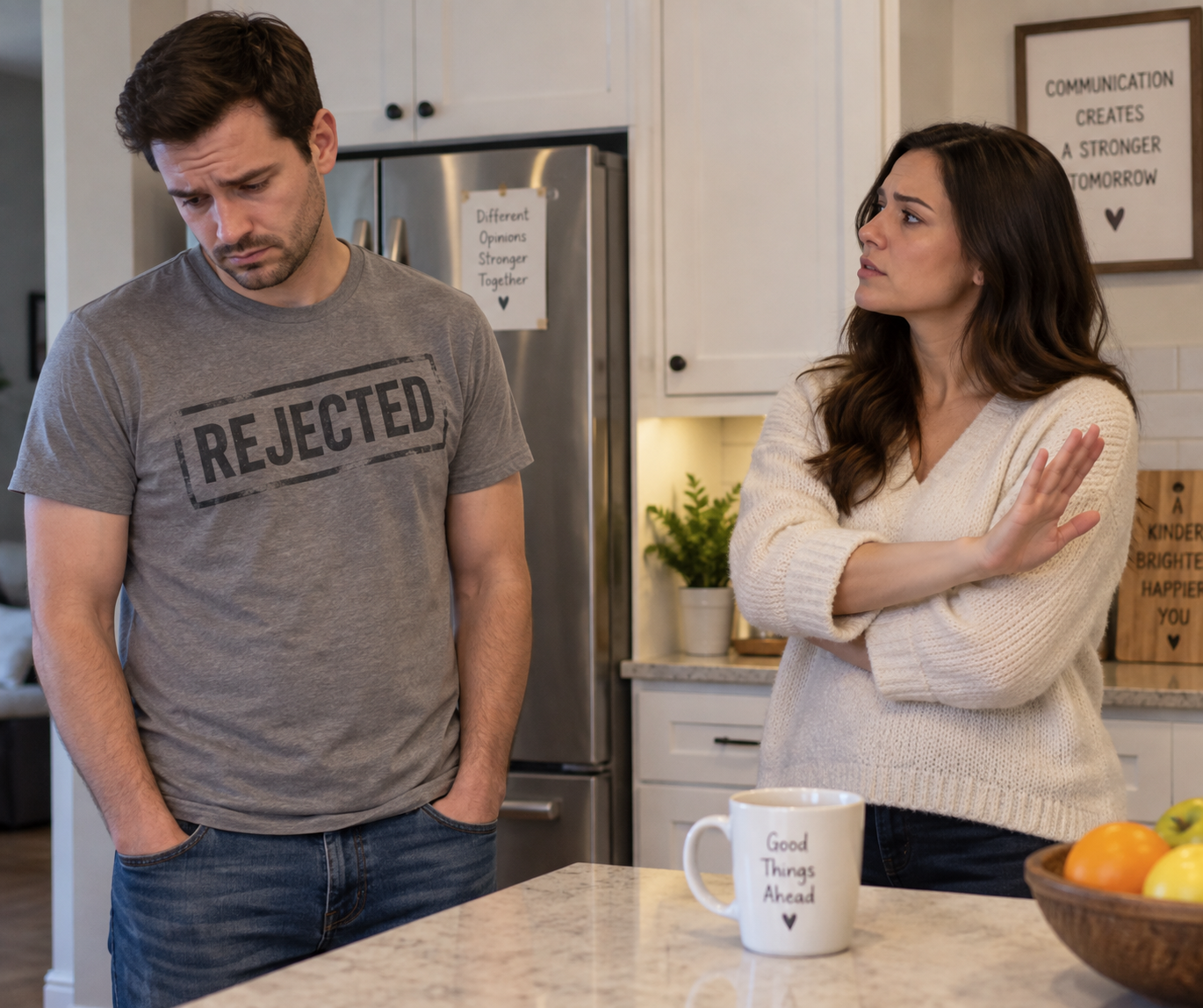
Rejection stings.
You ask your partner to go for a walk after dinner and they say, “I wish I could. Got to tackle this inbox tonight.” Ouch.
You try to initiate sex on a Saturday evening and your partner says, “Not now, babe. I’m so tired.” Ouch.
And yet the feeling of rejection extends far beyond our intimate relationships. Just the other day, for instance, Nate experienced it from his online Brazilian Portuguese tutor.
After several weeks of instruction, the tutor canceled all of his future lessons. He tried to contact her and received the following message: “You are no longer allowed to message this instructor.”
During all of Labor Day weekend, Nate wondered, “What did I do wrong? Did I offend her? Did I insult her by unloading groceries for a couple minutes at the beginning of our last lesson?”
Three days later, he received a new message from his tutor. “Looks like the platform accidentally canceled your lessons,” she said. “Sorry about that!”
This experience offered a helpful reminder that even the most subtle forms of rejection can still send us into a swirl of doubt and anxiety.
But is rejection bad?
For most of us, the answer is “yes.” It’s a sign that we did something wrong.
Today, however, we want to explore flipping this idea on its head.
What if rejection is actually good?
And what if setting your life up to avoid rejection is the real problem?
Avoiding rejection, after all, requires withdrawal.
If, for instance, you stop asking your partner to walk after dinner or to have sex on a Saturday, you won’t get rejected. But you will feel more distant, less connected.
This is why we encourage you to explore the strange practice of getting rejected…more often.
The invitation here is to reframe that uneasy feeling as a sign that you are leaning in, exploring your edges, and growing through discomfort rather than avoiding it.
So how can you experience more rejection in your relationship?
1. Embrace discomfort
Think about what actually happens when you get rejected. Your partner or somebody else says “no.” Next thing you know, you feel all sorts of deeply uncomfortable sensations in your body.
Most of us want to escape this horrible feeling as quickly as possible. So we protect ourselves by lashing out. Or we withdraw by retreating into passive-aggressive silence.
Here’s an alternative: allow yourself to feel the extreme discomfort of rejection.
Breathe into those yucky sensations. Let it be OK to feel this way, even if only for a moment.
You may find that you can stay with the sting. You don’t have to lash out, check out, or shut down to make the feeling go away.
This is a liberating insight because it means that you no longer have to organize your relationship around avoiding rejection.
2. It's not personal
Rejection feels so personal.
Your partner’s jammed inbox? That’s probably about you. Your partner’s disinterest in sex? Definitely about you.
But often, it’s not. Most of the time, it simply means that your preferences in this moment happen not to match up perfectly with the preferences of your partner. It might also be a complete accident like Nate’s Portuguese platform glitch.
In a lifelong committed relationship, this will inevitably happen, a lot.
So it’s helpful to catch yourself in these moments and ask, “What if this isn’t actually about me?”
3. See the double standard
When someone rejects you, the experience sticks like Velcro.
Perhaps that’s why you still remember the way your partner rejected you that night 4 years ago.
Or perhaps that’s why you’ll never forget the time you mustered up the courage to ask out your high school crush and they just laughed and walked away.
But what about when you reject other people? Somehow, these moments slide right out of consciousness like an egg on a nonstick pan.
So it’s worth acknowledging this simple truth: you reject people all the time.
You say “no” to your friend’s invitation to a weekend barbecue. You say “no” to your partner’s rom-com movie suggestion. You say “no” to all those people sending you texts and emails asking for your time.
Noticing rejection on both sides helps make the whole game feel even less personal.
Rejection is just what happens when you put more than 8 billion people on a small planet and ask them to coordinate work, life, and love. Sometimes, we’re all going to feel rejected.
"The goal in relationships isn’t to avoid this feeling. It’s to build a relationship where you can feel its sting and keep reaching for each other anyway."